

The NBL has seen significant growth over the past three years, with 2019/20 being the most successful season in league history.
In December, a league record was set for the highest total attendance in a regular season round when 67,206 fans attended nine games (Round 13). This smashed the previous record of 61,990 in round 3 of the 1995 season, which included ten games.
The league has seen also seen a 17% year-on-year growth in fan attendance, NBL games are now being broadcast to a potential 130 million people each week as viewers from the U.S., Europe and Asia now tune in. Not to mention the new heights achieved on social media emphasised by the 1.2 million US viewers who tuned in to watch the Sydney Kings play the Illawarra Hawks on the 17th of November.
The largest NBL crowd in history – 17,514 #NBLhistory pic.twitter.com/6ljwEJ1KbC
— AussieHoopla (@aussiehoopla) November 17, 2019
All this success and yet the majority of the league’s teams have still failed to turn a profit.
Financial cutbacks are easily noticed with the NBL commentary team no longer attending games, fewer NBL teams travelling overseas pre-season for events like the NBLxNBA games and half the league choosing to play with two import players instead of three for the first half of the season.
With many NBL teams now playing in front of stadiums at 80%-90% capacity, the opportunity for financial growth is reducing for some of the NBL’s largest teams, and cutbacks now need to be made for the league and its teams to become profitable.
The league has almost reached its ceiling within its current model… this is a time when successful businesses decide to pivot.
Netflix, which started out as a mail-order DVD service, was already a financial success, but when technology began to limit the company’s ability to grow, it identified the risk and decided to pivot into the content streaming provider that 12 million Australians now have in their home.
Currently, most NBL teams are being run by cashed-up owners bankrolling clubs due to a passion for the sport, tax benefits and the hope they can cash out in the future and get a return… and if somehow they turn a profit over some years, that’s even better.
To reach profitability, the NBL and its teams need growth. More teams in the league, providing more teams to generate more fans who will then happily attend games and buy merchandise.
More teams providing a greater reach which will then generate increased viewers, resulting in more brands wanting to use the NBL as an advertising platform (The NBL receives a share of advertising revenue from its current TV deal).
The NBL currently has a mix of private ownership and community-based models financing teams in metro and regional areas, and all have been unable to generate a profit over the past three seasons.
How can a league add more metropolitan teams with an aim for profitability when the bulk of the country’s capitals already host one unprofitable NBL franchise?
How can a league add more regional teams when cities like Illawarra and Cairns struggle to stay alive and other areas like Newcastle, Canberra, etc., just don’t have the corporate business structure needed to generate much-needed sponsorship revenue?
The answer may be coming along with the league’s soon-to-be-announced tenth franchise to be based in Hobart.
Hobart have longed to see an NBL franchise return to the Apple Isle ever since the state lost the Hobart Devils thanks to the financial pressure of the league’s initial growth during the 1990s.
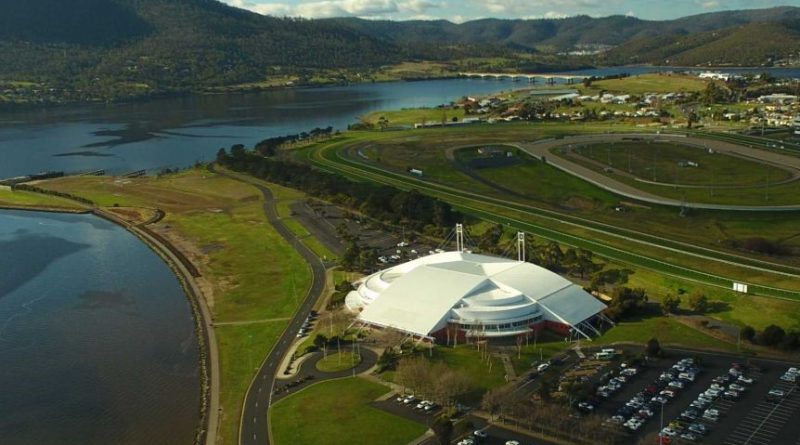
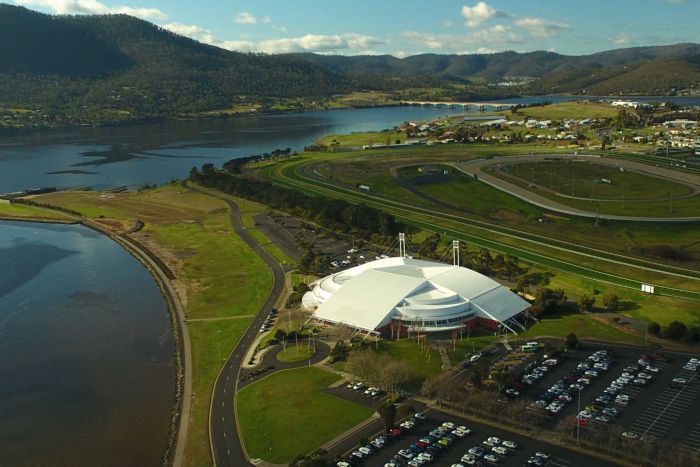
An artist’s impression of the proposed Derwent Entertainment Centre upgrade
NBL owner Larry Kestleman has been working alongside Tasmania’s State and Federal governments as well as the Glenorchy City Council to negotiate a deal to acquire ownership of Wilkinsons Point. In return, any money the government make from the deal will be used to upgrade the Derwent Entertainment Centre to be an NBL-compliant facility able to field a team in 2021.
This business model, which will allow Tasmania to return to the league, one which includes property ownership, is certainly unique to the NBL, but is commonplace to the many other successful businesses across the world.
While many believe McDonald’s makes the bulk of its money from convenience, burgers and fries, the real nucleus of its success stems from purchasing real estate.
In a very similar situation to the one the NBL now faces, after an initial period of financial growth, it became more cost-effective for the company to operate as a real-estate enterprise.
Essentially, Mcdonald’s acquires prime real estate, builds a restaurant and then leases the restaurant to a franchisee whose rent then covers the money McDonalds has invested into the property.
In the league’s current model, one which includes private ownership purchasing an NBL licence, financing a team, leasing a stadium and hoping to recoup its investment through ticket, merchandise and food sales it would be all but impossible to find a location in Australia that has the population, corporate structure, etc. available to produce a profitable franchise.
Cities like Geelong, Newscastle or Canberra who have previously fielded NBL teams have been proven unsustainable within the current NBL model… but whose to say if one of the largest areas of financing an NBL team, ie. venue hire, was reduced (or removed) could we see them return?
Geelong Basketball stadium is owned by the City of Greater Geelong, if NBL owner Larry Kestleman was able to purchase the areas surrounding the Geelong Basketball Stadium or a significant piece of real estate in Geelong where the profits made from the sale would go towards converting the 2,000 seat basketball stadium into a 5,000 seat NBL compliant venue, wouldn’t that allow an NBL team to compete in Geelong without the financial burden of venue hire making them a sustainable area for an NBL expansion team?
Newcastle will soon see a brand new 4,000 seat stadium unveiled for basketball in the Hunter Valley, is there a way Larry and the NBL could purchase this piece of land and help develop the new stadium which also includes an NBL compliant court for an expansion team?
If Larry Kestelman (in tow with his property development firm LK property) and the NBL change the direction of the NBL to be that of a real estate business and look to purchase prime areas of land in areas capable of fielding NBL teams ie. Geelong, Newcastle, Canberra could the league field financially sustainable teams in many smaller cities across the country?
If the NBL generated, it’s primary revenue from real estate ventures which allowed teams to play in venues owned by the league, how many extra teams could be sustainable? Ten? Twelve? Fifteen?
Could the Townsville Crocodiles still exist if the NBL owned the Townsville Entertainment and Convention Centre and the team didn’t have to spend money on venue hire? With the team able to operate by the slimmest of threads for a decade, removing the team’s major operating costs would surely have made things easy for the team to survive.
Is this a model that would see teams in Asia compete in the NBL within a financially stable mode?
Could the Singapore Slingers still be a part of the league if they didn’t have to pay for venue hire?
The world’s largest brands become global entities after pivoting when the time was right.
Before selling motorbikes, Avon originally sold magazines until its female buyers showed greater interest in the free samples of perfume than the magazines. In the early 1900s, Suzuki was best known for selling weaving looms, and prior to producing Super Mario and Donkey Kong, Nintendo was producing vacuum cleaners and instant rice.
The NBL is currently the fastest-growing major sport in Australia, and about with Hobart set to become the first NBL team based outside Sydney or Melbourne to join the NBL since 2007, the model that has allowed Hobart to enter the league may also be the model that sees the game grow beyond our borders.